


Bovary Madame
Comité Dans Paris
It seems that most of the plays I create for the theatre are essentially like séances. Spirits, are you there? Whether it’s bringing the writers of Minuit back to life in Nouveau Roman, artists who died of AIDS in Les Idoles, or members of my family in Le Ciel de Nantes. It’s as if I were granting the theatre the gift of necromancy.
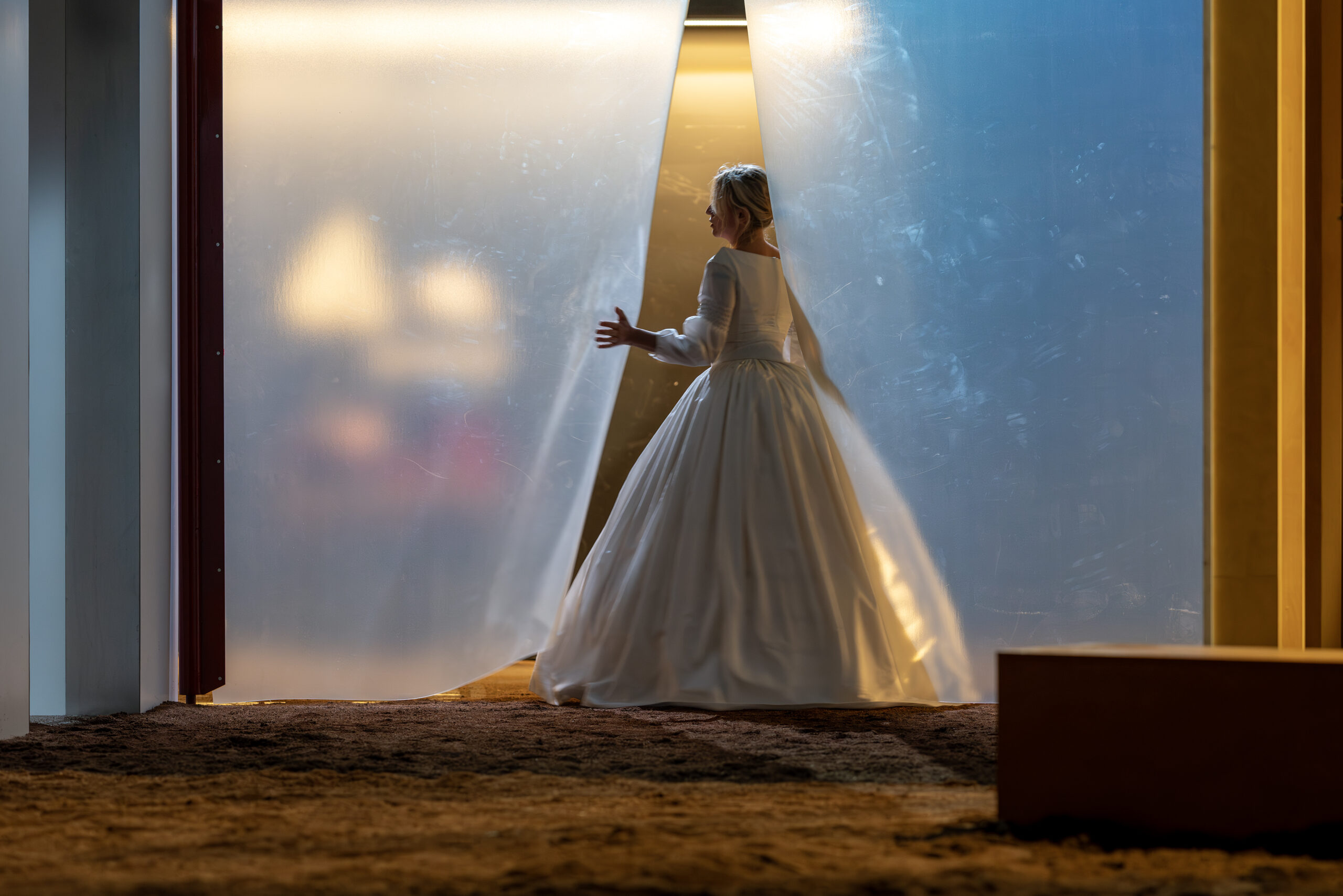
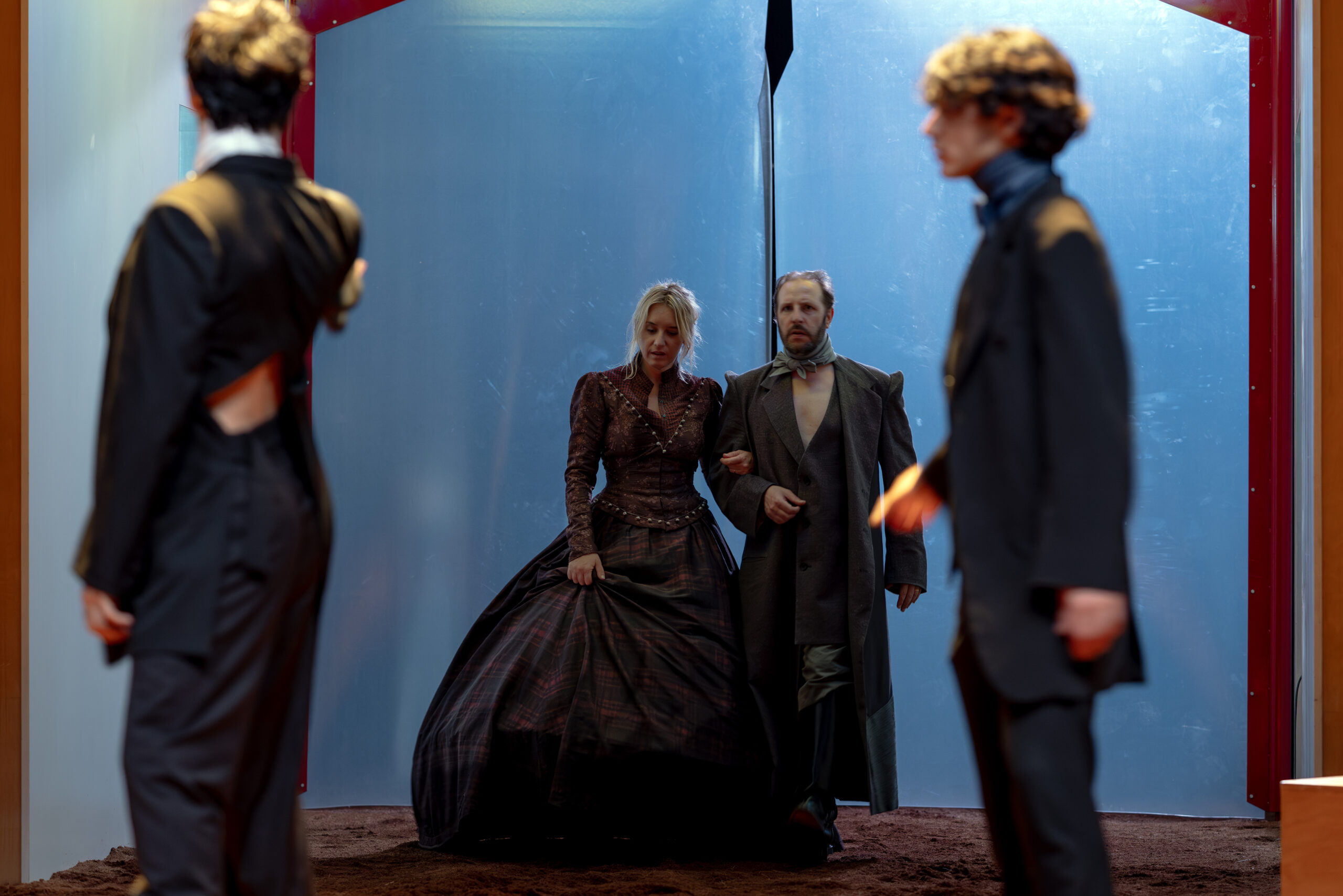
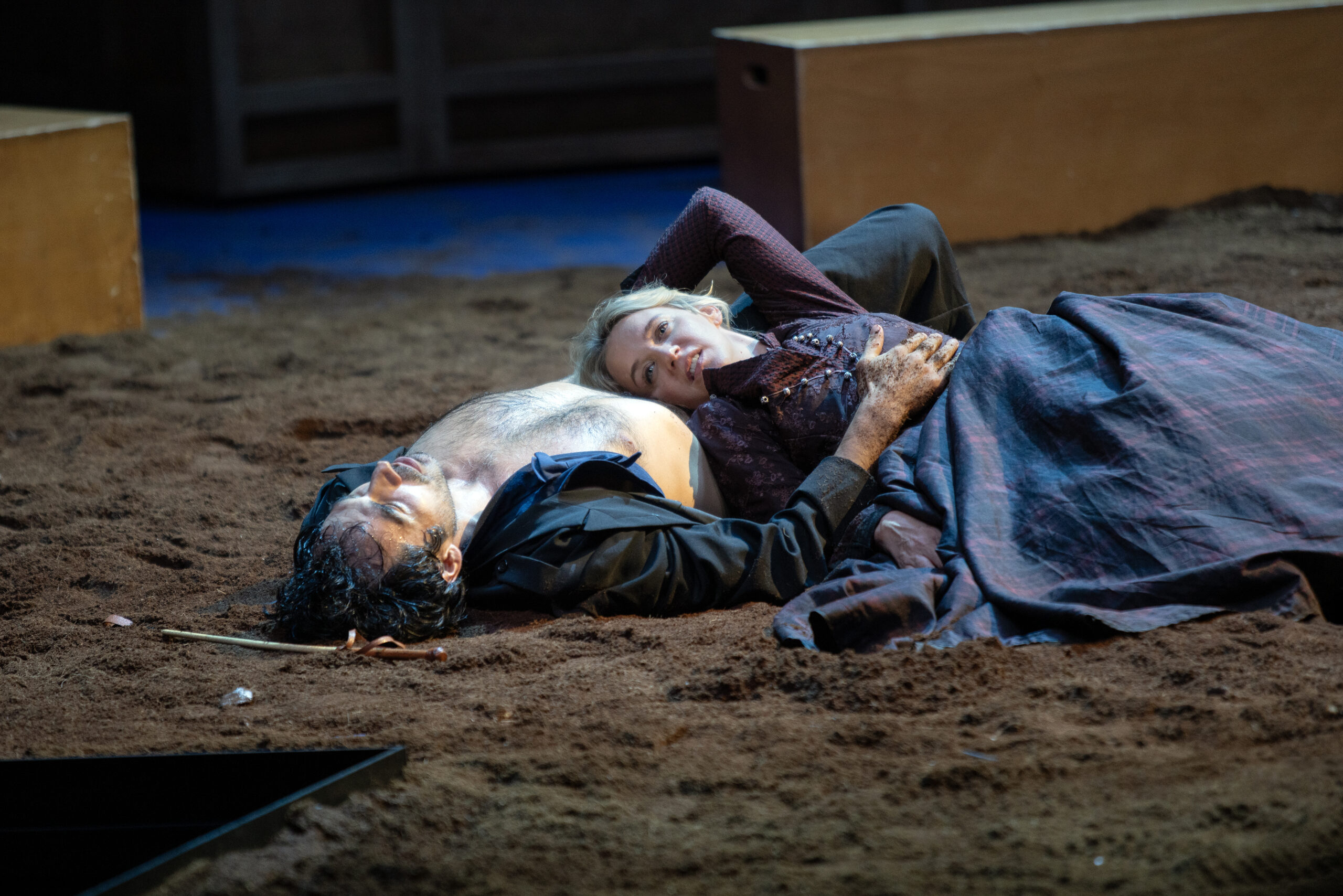
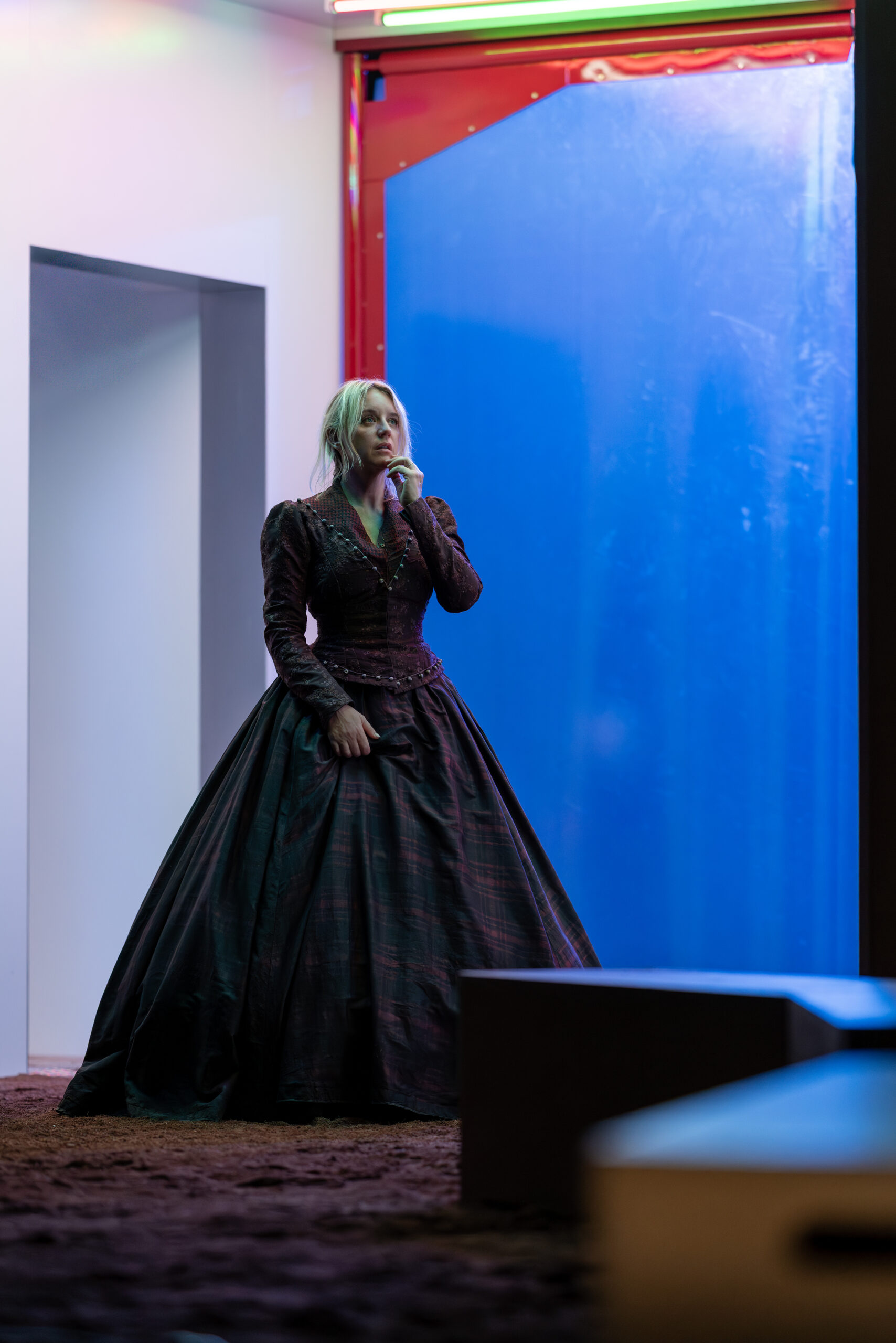
This time, I would like the stage to be haunted by a fictional character, and what’s more, perhaps the most famous in French literature: Emma Bovary. This time, I would like not to transform real personalities into theatrical figures, but to approach a fictional character as one approaches a person whose life we do not know in its entirety.
In The Art of Fiction, Henry James was astonished that a novel depicting the fate of a country doctor’s wife in a Norman village could result in such a masterpiece: “The elements to be painted are few, the heroine’s situation is, so to speak, miserable, the material the least promising; yet all this gives life to a work of genius… The poor adventures of Emma Bovary are a tragedy because, in a world that suspects nothing of her, leaving her without help or consolation, she must distil the precious and the rare on her own.” The disproportionate and futile struggle that Emma Bovary wages between her cruel reality and her romantic aspirations is the basis for this character’s astonishing mystery. Is she a distant sister of Don Quixote, or just a heroine without means whose naivety and ignorance can be mocked, or does she embody, in a flamboyant, rebellious and very modern way, the female refusal to give up? Through various readings and interpretations, Emma Bovary has acquired the status of a female myth whose symbolic function continues to be questioned.
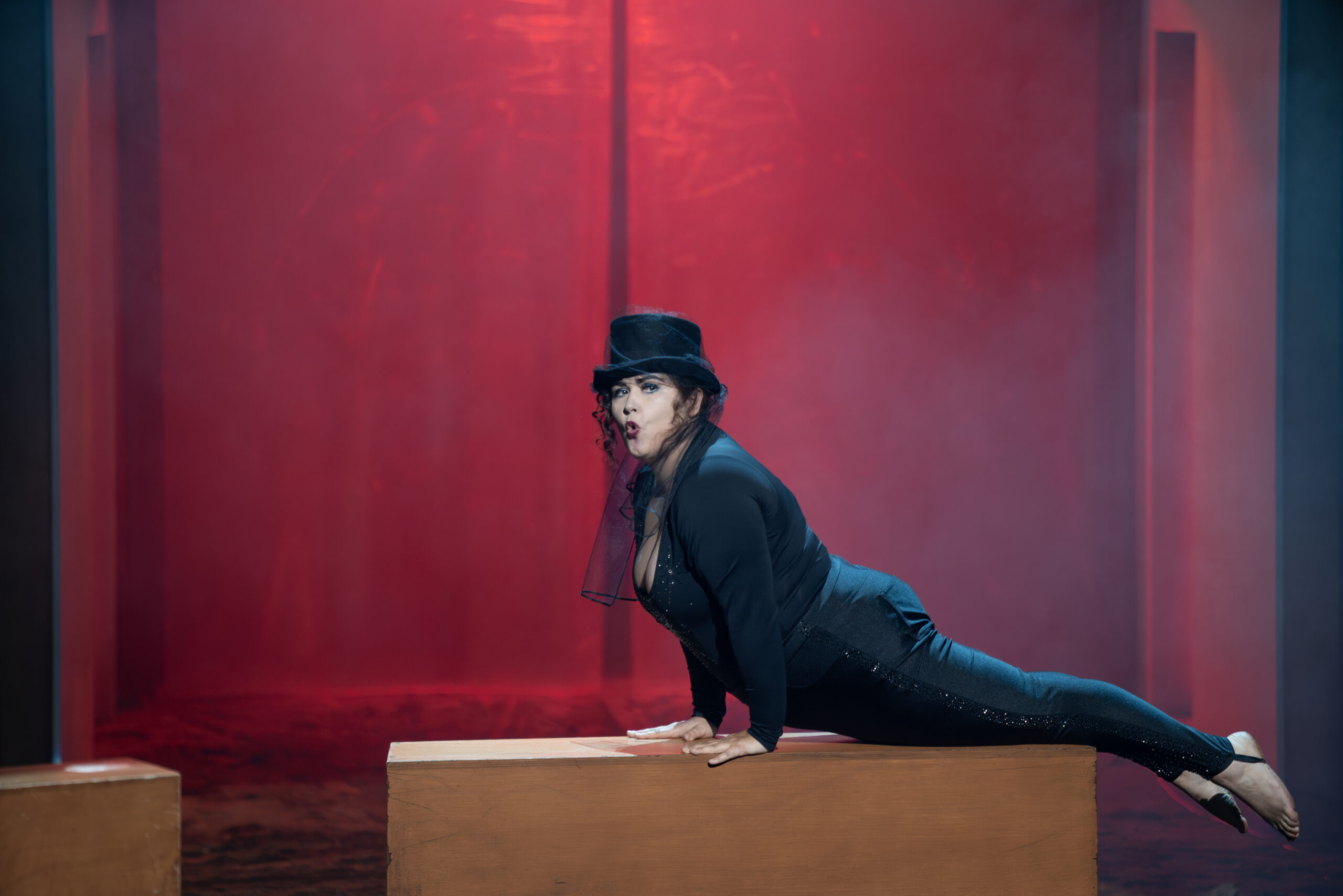
By a strange analogy, when I think of Emma Bovary, I see Martine Carol in the film Lola Montès. The filmmaker Max Ophüls portrays his title character, an imaginary figure, as a circus animal, offered up to the lust and contempt of the public by a monstrous ringmaster. Lola, a former courtesan who turned the heads of royalty, survives only by re-enacting the most scandalous episodes of her career every night in pantomime. Like a nightmare, the film alternates between circus scenes and historical re-enactments that seem to emanate from the character’s memory.
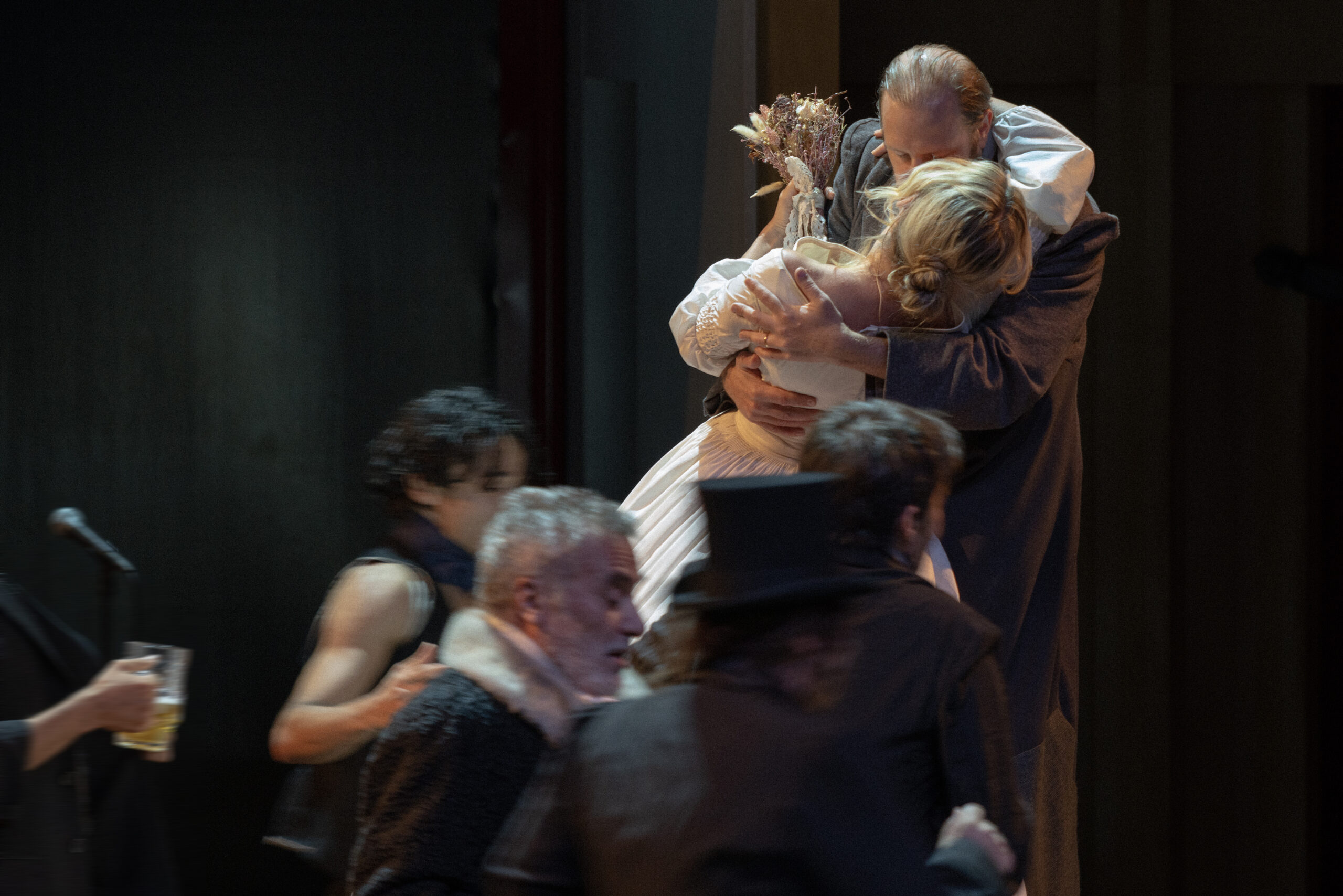
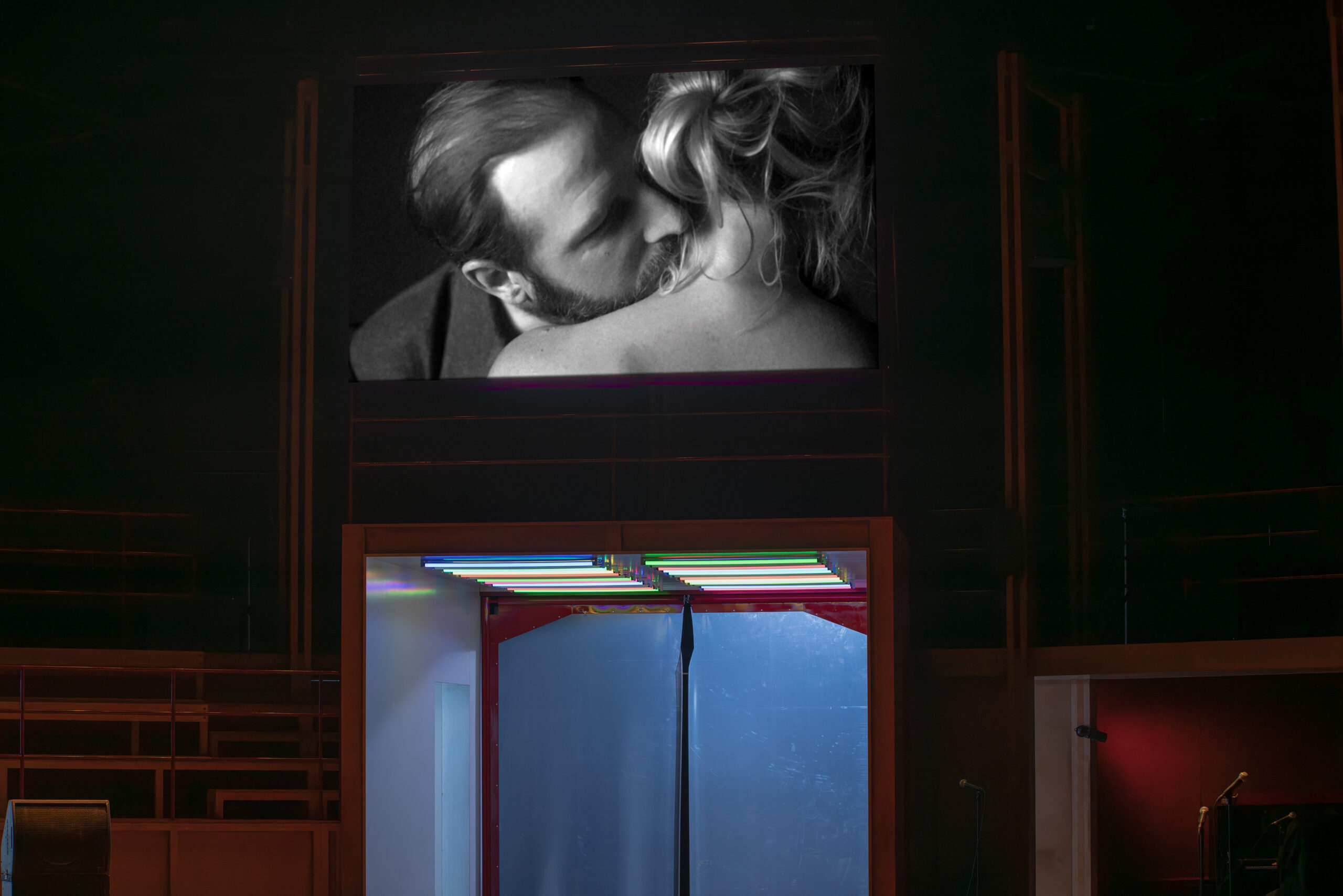
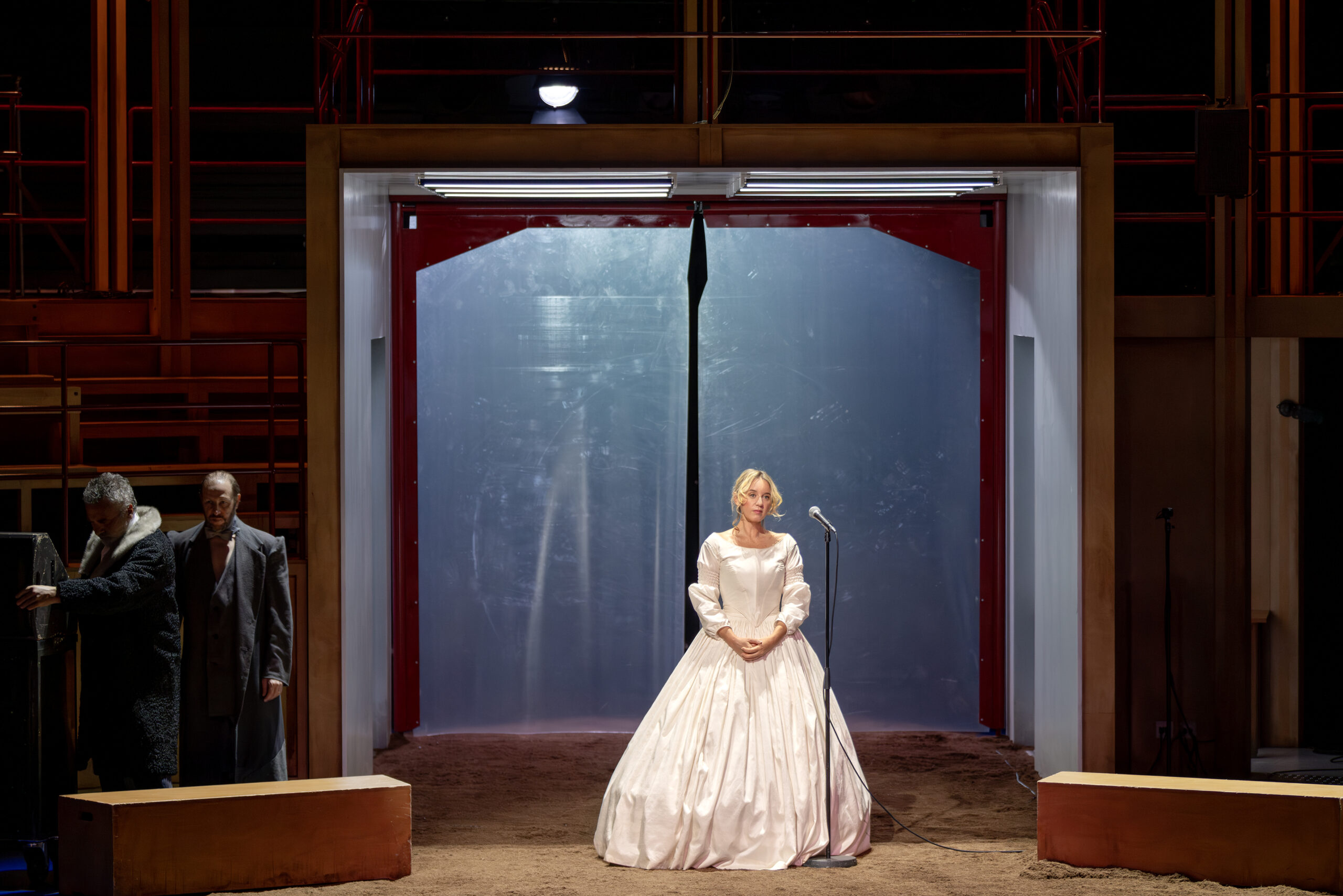
I would like to stage Madame Bovary in a similar dual movement: distance and intimacy, spectacle and reality, parade and true feeling. By linking episodes based on the stages of the story: Emma at the convent, Emma at her wedding, Emma in the woods, Emma in the Fiacre…
Emma Bovary is not Lola Montès, whose romantic life as a great lover she would certainly have envied, but however ordinary and banal she may be, her career as an adulterous wife is no less scandalous. And in Flaubert, as in Ophüls, it is indeed a story of agony. By placing her both as the “actress” of herself and as the subject of commentary, my idea is to succeed in defining the contours of her figure, in the same way that one focuses on a face when filming.
I have been writing and directing for the theatre for over twenty years now, and I am fortunate to have built up a loyal troupe of actors around me. It is with them that I want to embark on this new project: Harrison Arevalo, Jean-Charles Clichet, Julien Honoré, Stéphane Roger, Marlène Saldana, and Ludivine Sagnier.
I would like them to be joined by a young actor. We will work with the method we have perfected show after show: a stage script that leaves plenty of room for improvisation based on meticulous dramaturgy work. I believe that they all have ideas about Madame Bovary, and that it would be frustrating and awkward not to give them all the opportunity to embody her at one point or another on stage.
Flaubert gave Madame Bovary the subtitle ‘Provincial Customs’. It may seem strange, but in my eyes, the secret heart of this project, what attracts me so much, is contained in these words, ‘Provincial Customs’. Through this show, I hope to rediscover something of the small town where I grew up, to rediscover the shopkeepers, the smell of wood fires, the narrow streets at night, the rumours during the day, the undergrowth where we used to lie down, the dances in the neighbouring town that we dreamed of attending, and the certainty that we disguised as barely credible hope, that only love can save us.
Written and directed by
Christophe Honoré
Starring
Harrison Arévalo (Rodolphe Boulanger)
Jean-Charles Clichet (Charles Bovary)
Julien Honoré (Monsieur Homais)
Davide Rao (Léon Dupuis)
Stéphane Roger (Monsieur L’heureux)
Ludivine Sagnier (Emma Bovary)
Marlène Saldana (Madame Loyale)
And
Vincent Breton (The Blind Man)
Nathan Prieur (Justin)
Emilia Diacon (Emma Bovary as a child)
Salomé Gaillard (Berthe)
Collaboration on staging Christèle Ortu
Set design Thibaut Fack
Lighting Dominique Bruguière
Costume designers Pascaline Chavanne
Costumes with the participation of Yohji Yamamoto
Sound Janyves Coïc
Collaboration on video Jad Makki
Filming support Léolo Victor-Pujebet, Mathieu Morel, Augustin Losserand, Marc Vaudroz
Lighting assistant Pierre-Nicolas Moulin
Costume assistant Zélie Henocq
Dramaturgy assistants Paloma Arcos Mathon, Brian Aubert
Video creation and production assistant Lucas Duport
–
Stage manager Nelly Chauvet
Stage management – props Stéphane Devantéry, Luc Perrenoud (alternating)
Lighting Pierre-Nicolas Moulin, Julie Nowotnik (alternating)
Sound Janyves Coïc, Philippe de Rham (alternating)
Video Stéphane Trani
Set design Linda Krüttli
Set construction Ateliers du Théâtre Vidy-Lausanne
Production Aline Fuchs – Théâtre Vidy-Lausanne, Colin Pitrat and Iris Cottu – Les Indépendances
Distribution Elizabeth Gay
Press Mathilde Incerti, Myra, Anahi Zolecio
–
Production Théâtre Vidy-Laussane, Comité dans Paris (Christophe Honoré’s company)
Co-production Théâtre de la Ville, Paris – TANDEM Scène nationale Arras-Douai – Le Quartz – Scène nationale de Brest – Bonlieu Scène nationale Annecy – Théâtre national de Bretagne, Rennes – Les Célestins, Théâtre de Lyon – Mixt, Terrain d’arts en Loire-Atlantique – La Comédie de Clermont-Ferrand scène nationale – Théâtre National de Nice – CDN Nice Côte d’Azur – Scène nationale du Sud-Aquitain – Scène nationale de l’Essonne – Le Quai CDN Angers Pays de la Loire – La Coursive Scène nationale La Rochelle
The project is supported by the Ile-de-France Region.
The Comité dans Paris company is accredited by the Ministry of Culture – DRAC Île-de-France for the years 2023 to 2026.
With the support of Maison Yohji Yamamoto.
With the support of Maison des métallos.
Residency at Cromot • Artists’ and production centre.
Acknowledgements
Antoine Magnan, Alexandre Magnan, Florence Pellegrini, Rosas, Officine Universelle Buly, Claire Minger, Yann Burgat, Margaux Loyau